
113. Sexy
How a lot of it isn't. Eraser debris, downshooter iteration, slogging away. MacDowell, excepted. Onward.

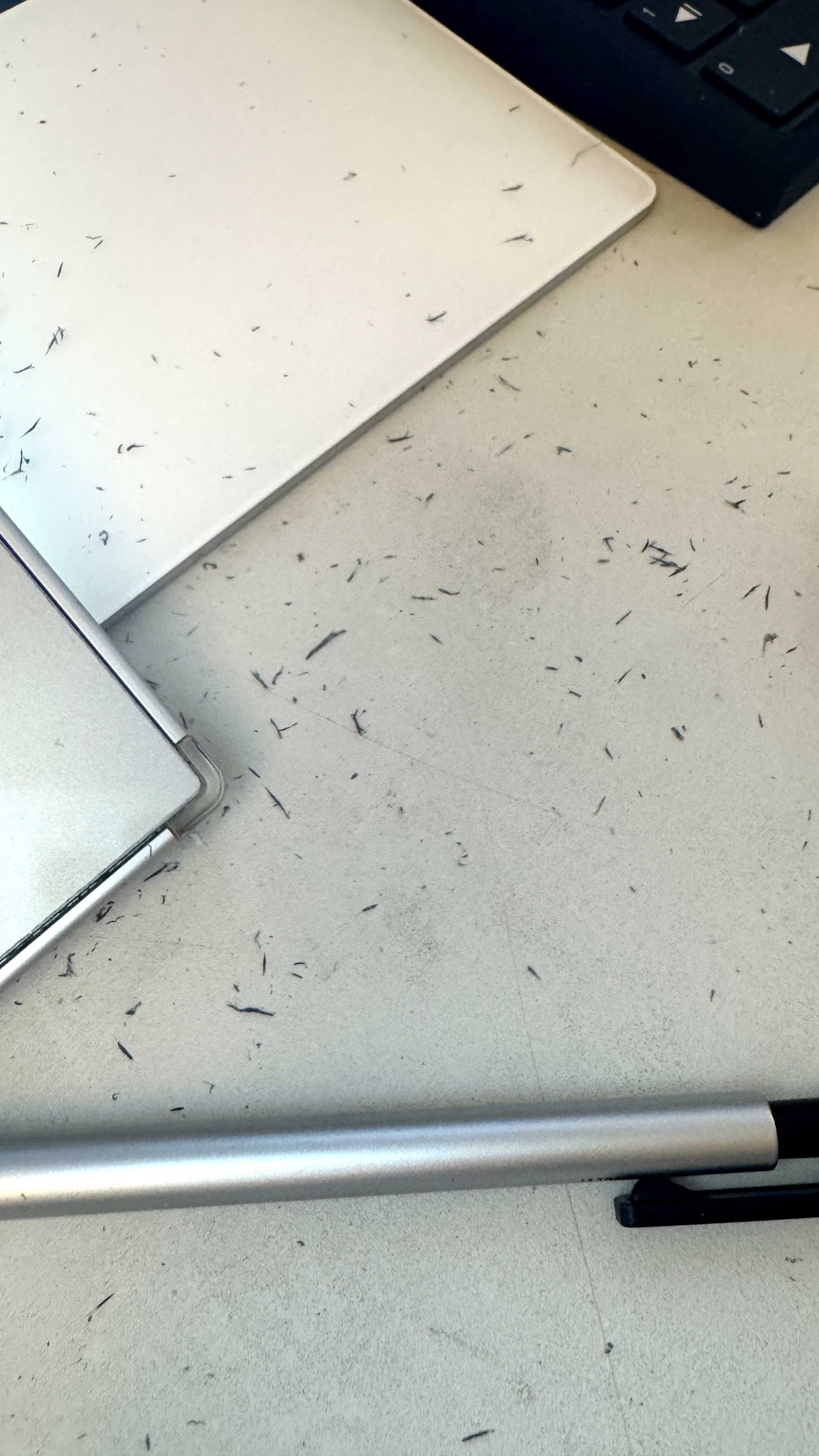
At the end of a day at the Brooklyn studio, I stared at the ratio of eraser debris to drawings I’d produced in the swiftly-extinguished afternoon hours, sat back in my chair, and said to the artist sitting behind me: Why do we do this?
He only half-laughed.
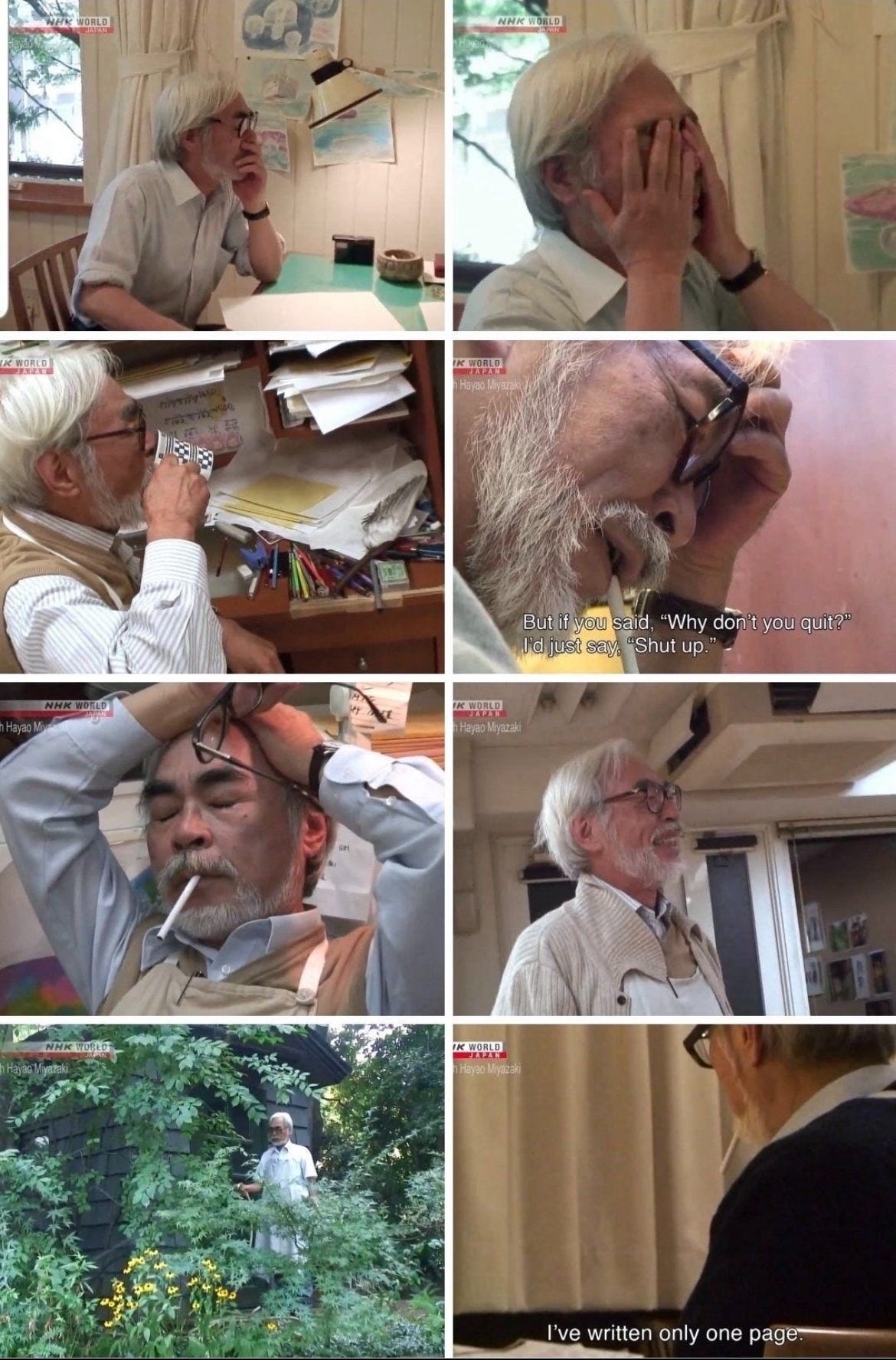
Animators never lose an opportunity to tell you how hard animating is. How slow and time-devouring and weird and crazy-making. It’s un/fortunately also magically, unpredictably rewarding, and as wonderful as it can be miserable.
That makes it addictive.
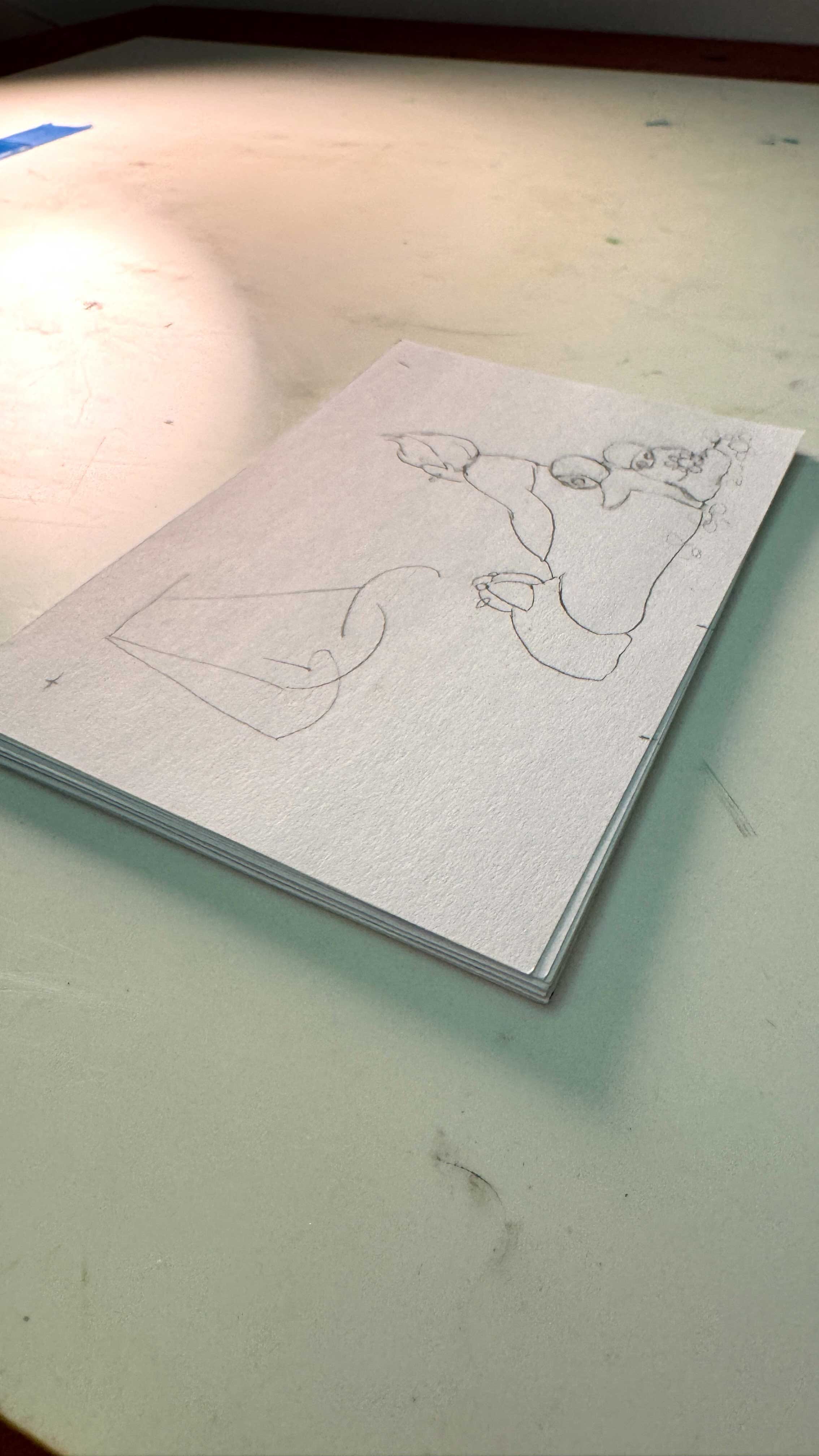
I began animating on paper almost a year ago, learning how to use DragonFrame in the process. I started working on a film. I finished a primer, then a storyboard; I’m learning as I go. Six weeks ago, I put together an animatic.
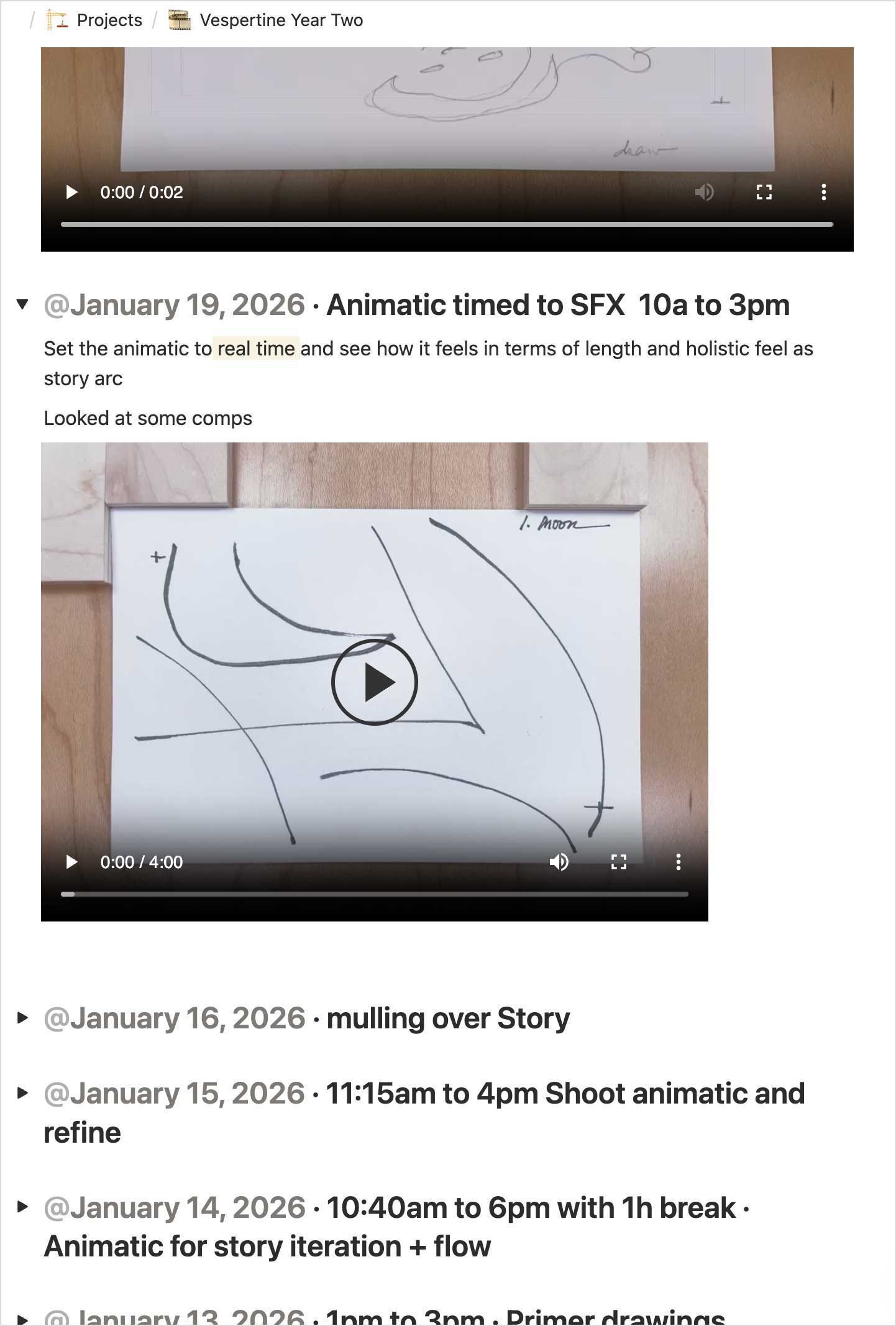
Sometimes I need to scrap an entire day’s work and dream about the speed and convenience of digital animation. I miss being able to rotate, resize, duplicate, and loop within seconds. The effortlessness of animating multiple layers of movement. Zooming in, to inbetween at the smallest scale with precision. Discernible onion skins.
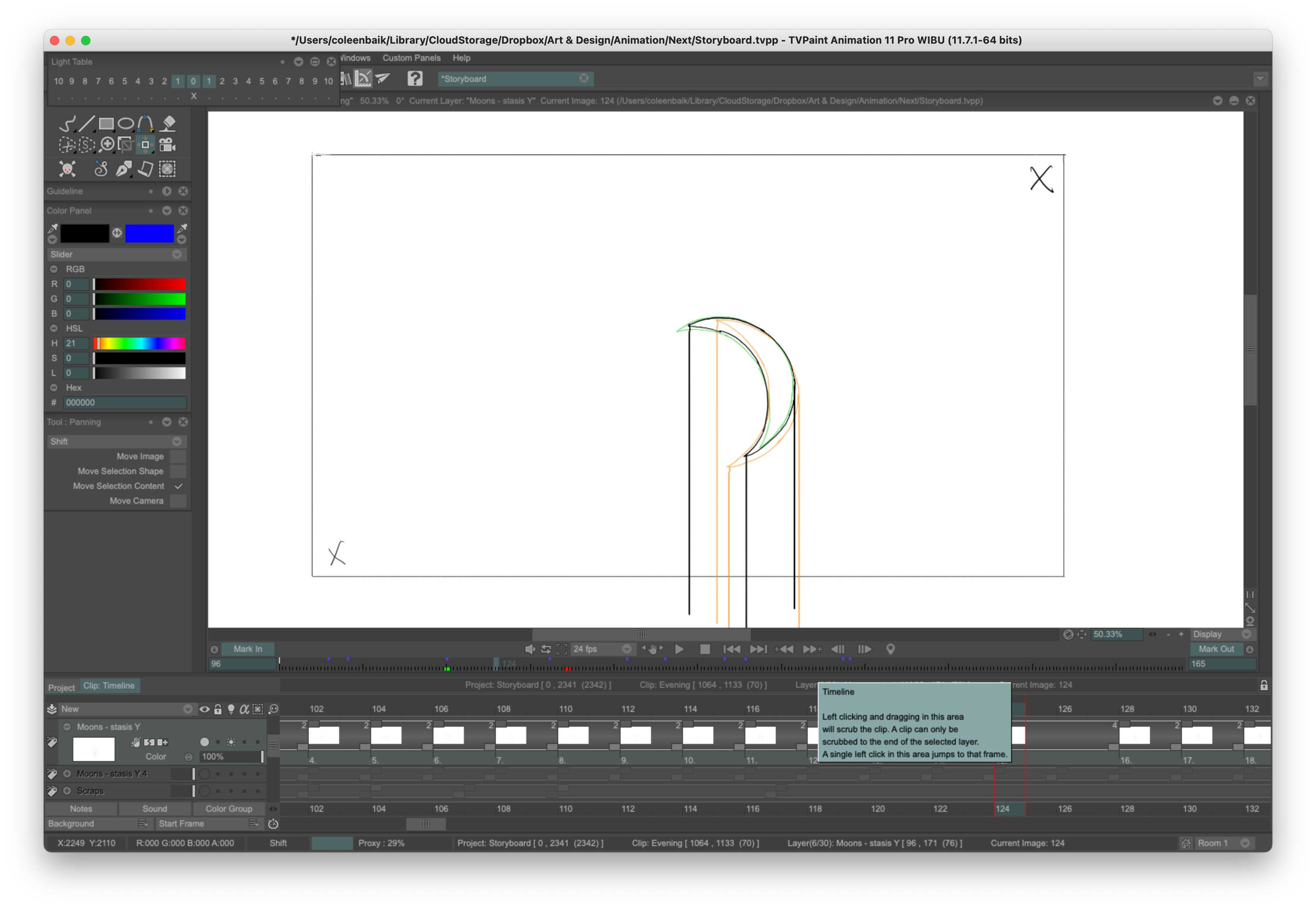
When I need to erase yet another bit of drawing, my fingers twitch for Command-Z. Sometimes a line just needs to be nudged a little; my instinct still, is to simply move it. In those moments, the idea of animating digitally + printing + tracing + scanning seems positively efficient. Easy. Fast.
So why don’t I go back to TvPaint, or at least some sort of hybrid flow?
I probably will eventually.
But not exploring on paper feels like a copout, akin to speaking only one language, or never leaving my hometown. I’m curious about ways of seeing and problem-solving that another language will open up to me. The film is important, but it’s also an excuse. To play, explore, and develop expertise in something that will expand possibilities and give me options.
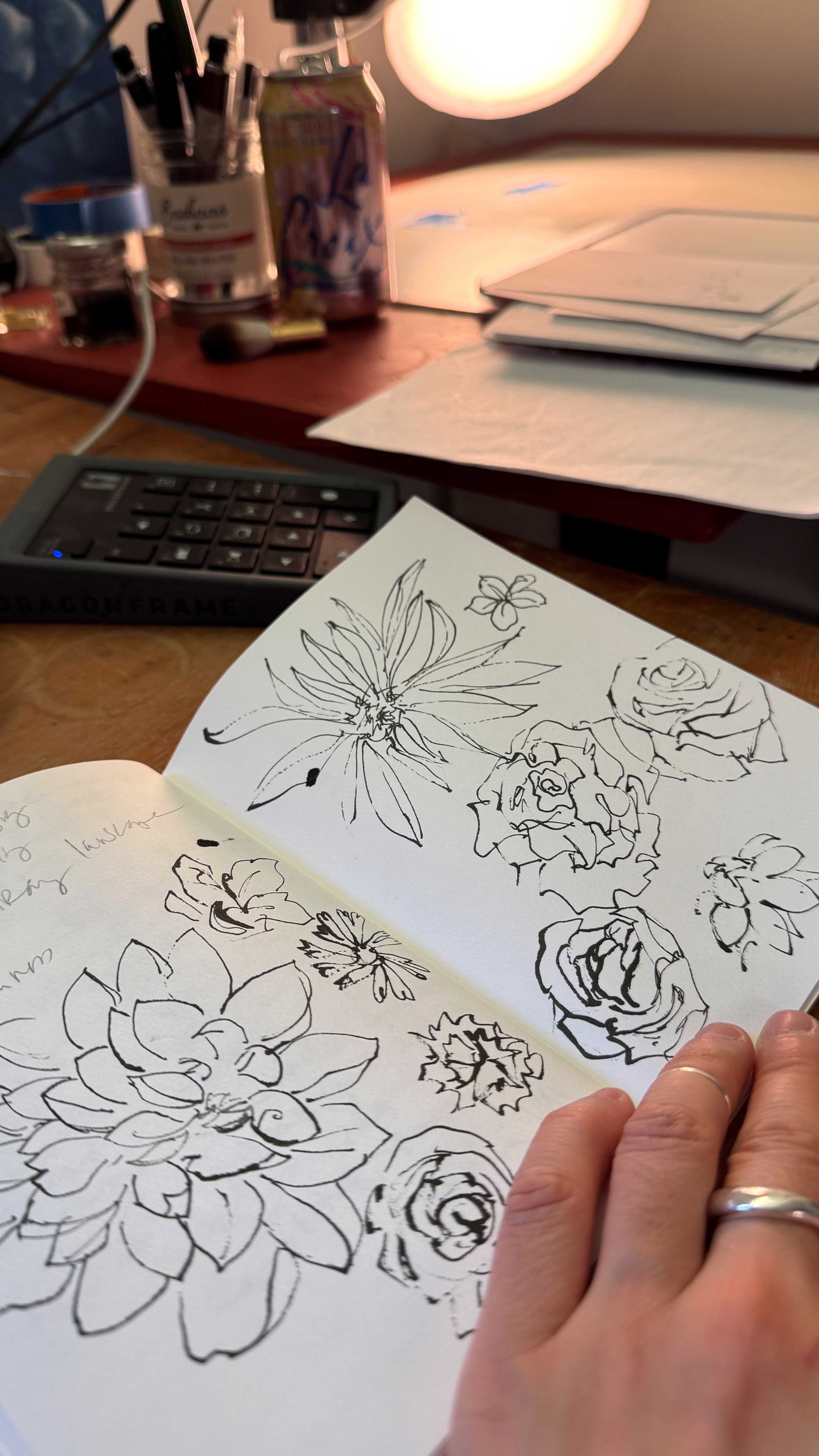
Lastly, in the era of “let the machine do everything,” I’m increasingly drawn to do more of the labor myself.
This doesn’t stop me from complaining, and, no doubt fatigued, a friend said, If you found a way to produce your film perfectly to spec and vision with zero time or effort, would you use it?
My response was—I see what she did there—What would be the fun in that?
In the Studio
tl:dr; I iterated on my downshooter setup again and am working my way through a really unsexy stretch of animation.
This might be the sixth iteration of my setup.
I’ve gone to great lengths to construct a minimal setup with a certain aesthetic. I learned though that it’s near impossible to establish precision and stability for animation with a rig like the one I made.
After getting a taste of what it’s like to work with an actual camera + fixed stand at the Brooklyn studio (amazing), and with my Jerome Hill Artist Fellowship funds earmarked expressly for such a purpose, I bit the bullet and bought in.
The latest iteration feels surprisingly clean and minimal:
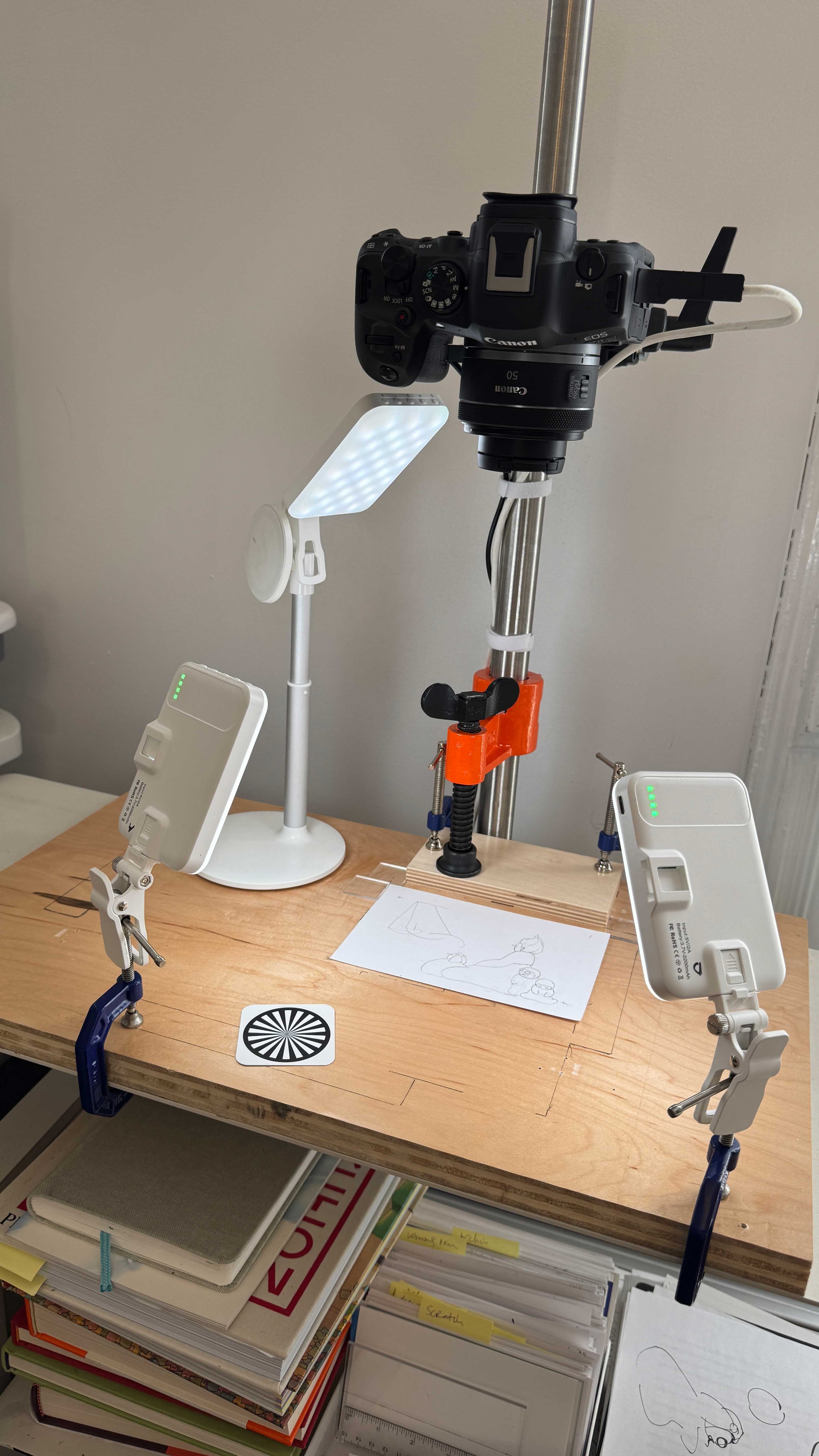
This was a long journey but I’m glad I went through it.
I’m keenly aware of the privilege afforded me by my fellowship grant, by the way. I recognize what a luxury it is to be able to prioritize experimentation this way. It’s hard-won and I’m going to make the most of it until 2028 when my fellowship ends.
A really unsexy stretch of animation
I explored compositing when I made the primer, but I think I want to avoid that level of complexity whenever possible. In the next bit I’m working on, I wanted to see if I could animate concurrent, but relatively simple, movement, without the level of fuss.
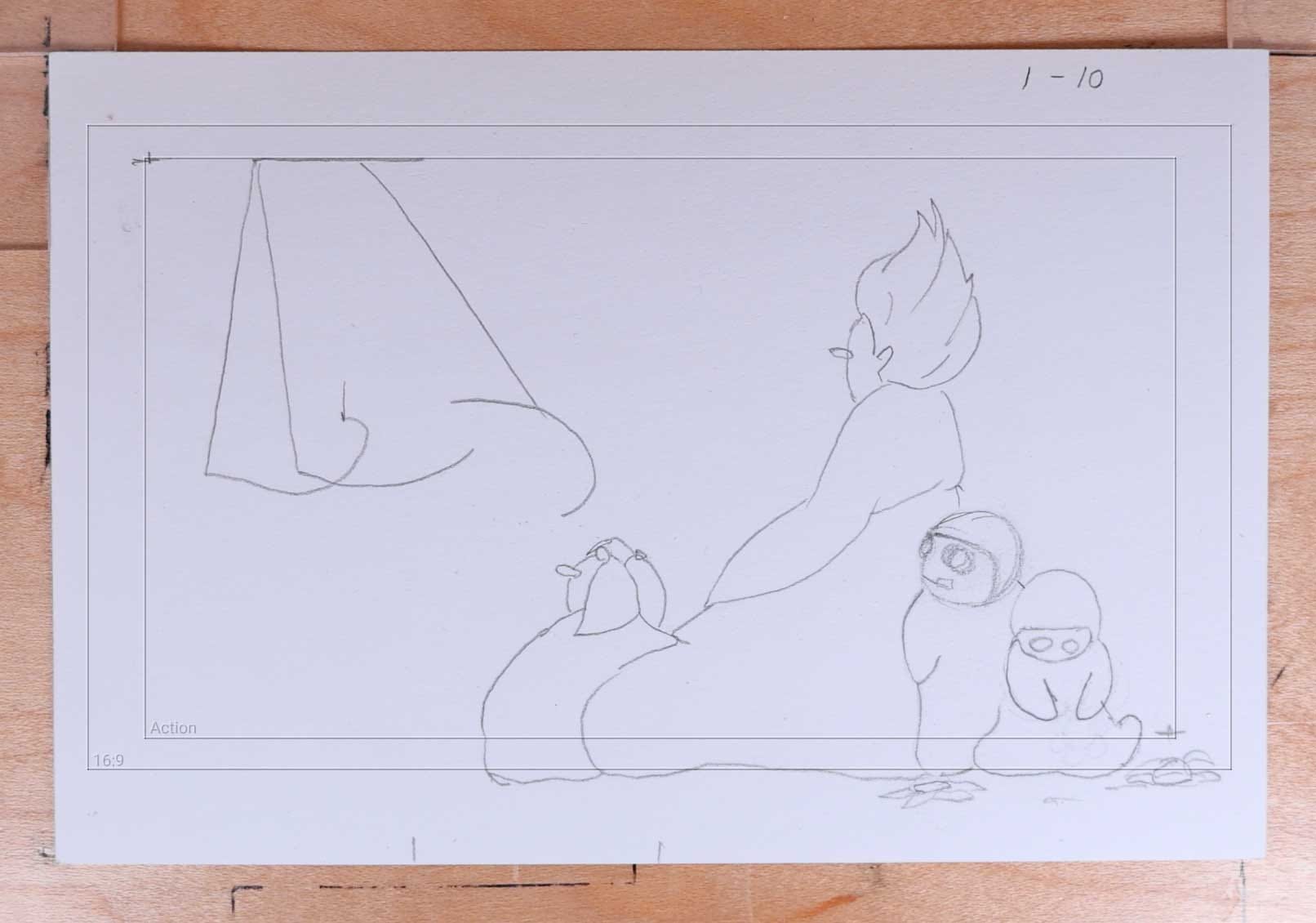
I did the curtains first, then paced the girl (and another girl’s head turn) in during a second pass. I was mindful of timing; the girl’s arms move at varying speed:
For largely static/looping elements or backgrounds, compositing seemed dumb to reject:
I like animating expressionistic sequences with big camera sweeps. I like solving the kind of problems that presents. I haven’t enjoyed animation grounded in realism as much. I don’t get bored but that gets me pretty close. I get through it by looking for opportunities in the din, things that feel alive and interesting, animated:
I’m putting in the hours hoping to improve dexterity so that I can experiment faster (and have more fun). Meanwhile, batting away doubt and fear is half the work.
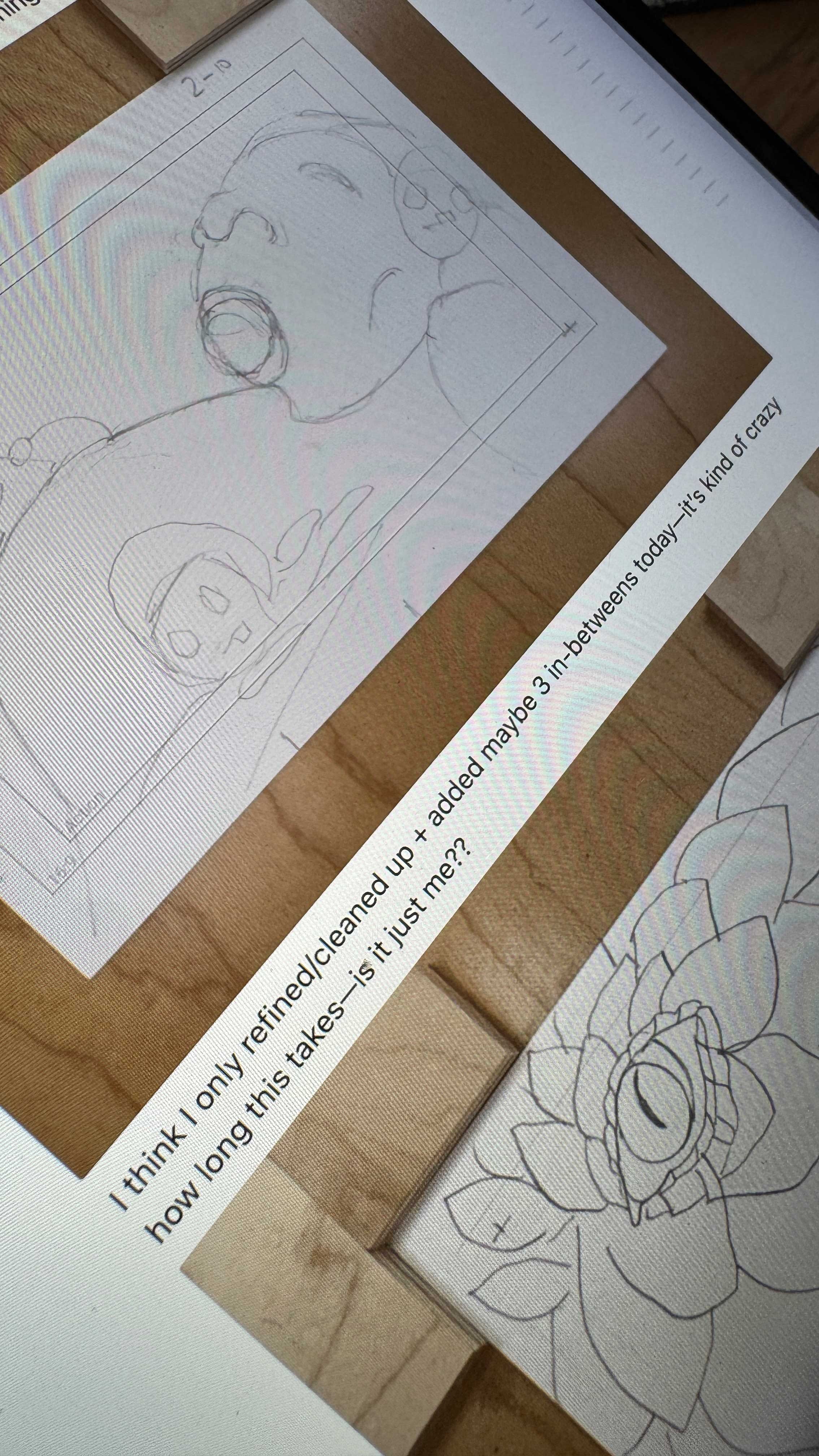
At the end of the day of course, it doesn’t matter if it’s “just me” or not. The work still needs to get done.
MacDowell
I’m honored to be a Spring Summer 2026 MacDowell Fellow in film.
MacDowell is the nation’s oldest artist residency program, and luminaries like James Baldwin, Ta-Nehisi Coates, Teju Cole, Audre Lorde, Willa Cather, Laura Poitras, Leonard Bernstein have been Fellows.
I’m looking at the names in my own cohort and it’s hard to believe that someone like Mary Gaitskill?! is a peer.
I’m feeling a lot of things about this, but gratitude is way up there.
Provisions
The Prophet. I first heard about this book, improbably, on the spy romcom series Mr. and Mrs. Smith. It reminded me how time- and life-stage-sensitive books are. Years ago this book may have elicited, at best, indifference from me. Today, it moves me deeply.
Date snickers morsels. Sandwich some PB and almond slices between rolled-out medjool dates, par-freeze. Cut up into bite-size chunks, enrobe1 in dark chocolate, dust with flaky sea salt, freeze. Enjoy by piece after dinner.
C*nt Eyes rough cut of an unfinished short by Lale Westvind (h/t Amanda Bonaiuto). Fascinating what passes for “final;” I would gladly watch this on a big screen.
Trifling Habits I love Sarina Nihei’s work so much.
The Best Short Stories 2024, edited by Amor Towles. These O. Henry Prize Winners are exceptional. I’m getting back into short fiction and remembering what feats they are. I especially loved “Seeing through Maps” by Madeline ffitch. The incredible first sentence: “I was splitting wood at sunset when the cat jumped up on the chopping block in front of me, arched her back, and took a long piss.”
Eno. I’ve posted about this generative documentary before, but they recently had a global livestreaming event (sign up to be notified of future screenings) and I snagged a second viewing. The point is that the film is different every time it screens, so it was also my first.
In Closing, Onward
On the recent Monday that buried Manhattan under over 15 inches of snow, I went for a walk. I’d never walked through a blizzard before, only having read about them, rapt, in Laura Ingalls Wilder’s The Long Winter, so I hurried out the door lest I miss the opportunity.
I live in a three-flat Harlem brownstone and there were signs that one of my housemates had left, even earlier that morning. The snow, falling steadily, had already half-covered her tracks.
There had been hushed whispers about the impending storm for days, but it had felt mythical given that weather had been a balmy 40ºF, and light rains had melted away most snow banks. Spring seemed imminent.
Before New England got pummeled, I didn’t know that “blizzard” was a technical term (largely unrelated to amount of snowfall) referring to a severe meterological event with very specific characteristics: winds of at least 35 mph, sustained for 3 or more hours, limited visibility of 0.25 miles or less.
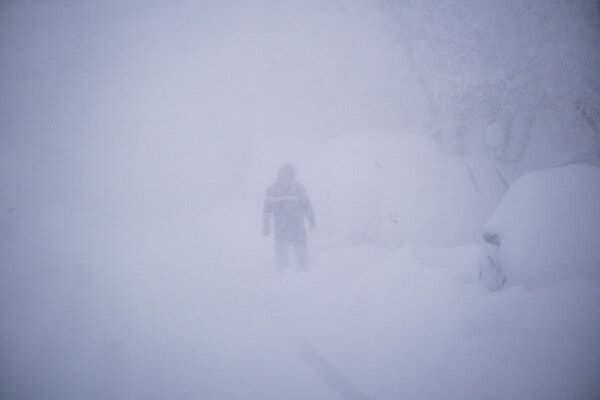
I immediately understood why blizzards have been spoken of as “disorienting.” Snow was still falling; wet, steady, blowing into my eyes and making my hair fly up in front of my face like fire. Street signs were obscured. Buried under mounds of white, boundaries and limits were erased.
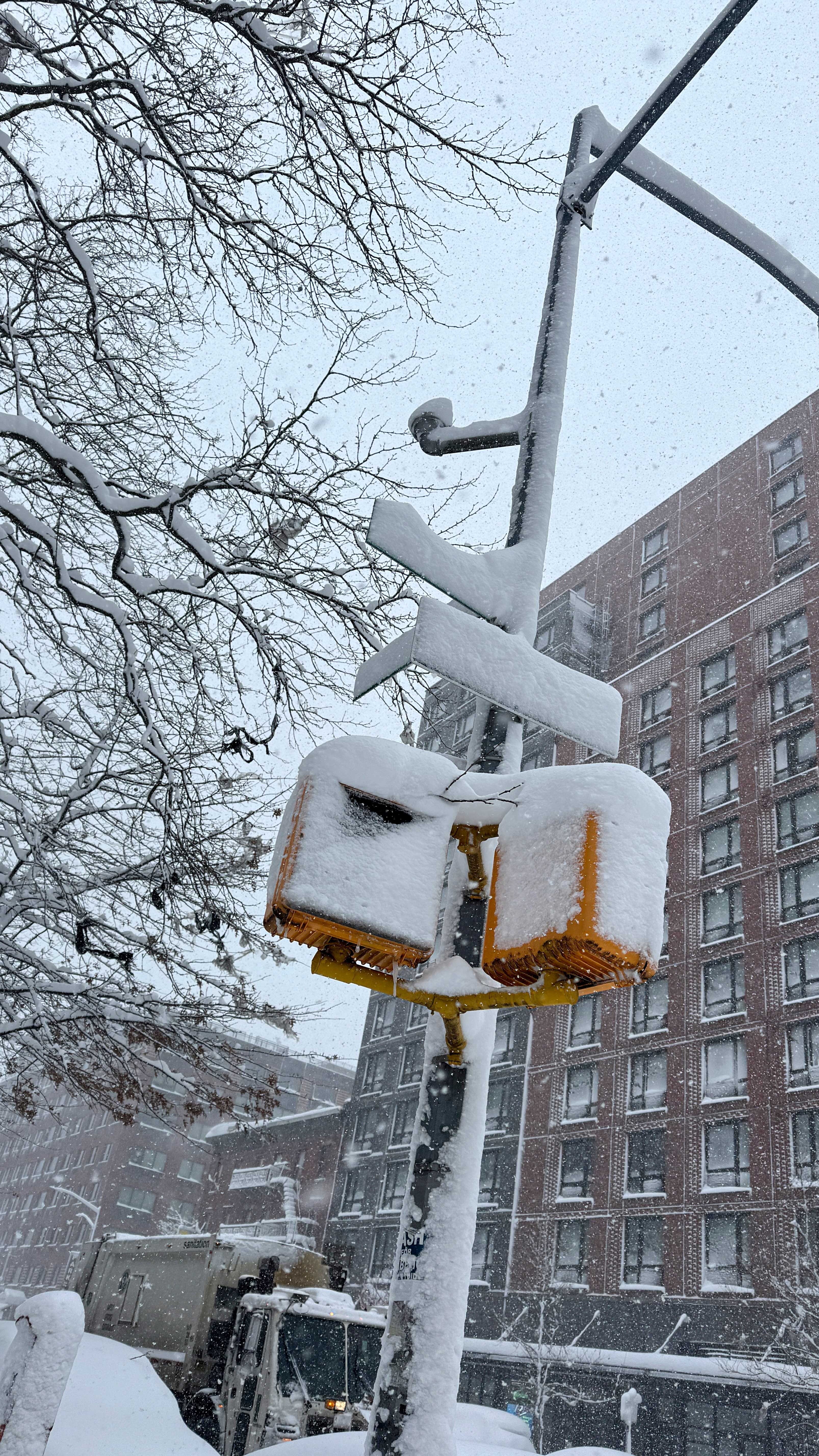
I couldn’t tell where sidewalks ended and where streets began. Even as I walked a path I’d walked hundreds of times in my own neighborhood, I needed GPS to anchor me. This was when I noticed that my phone was running out of battery; I may not have access to it for my return home. It would be a tractable inconvenience, but it still struck me, and unnerved.
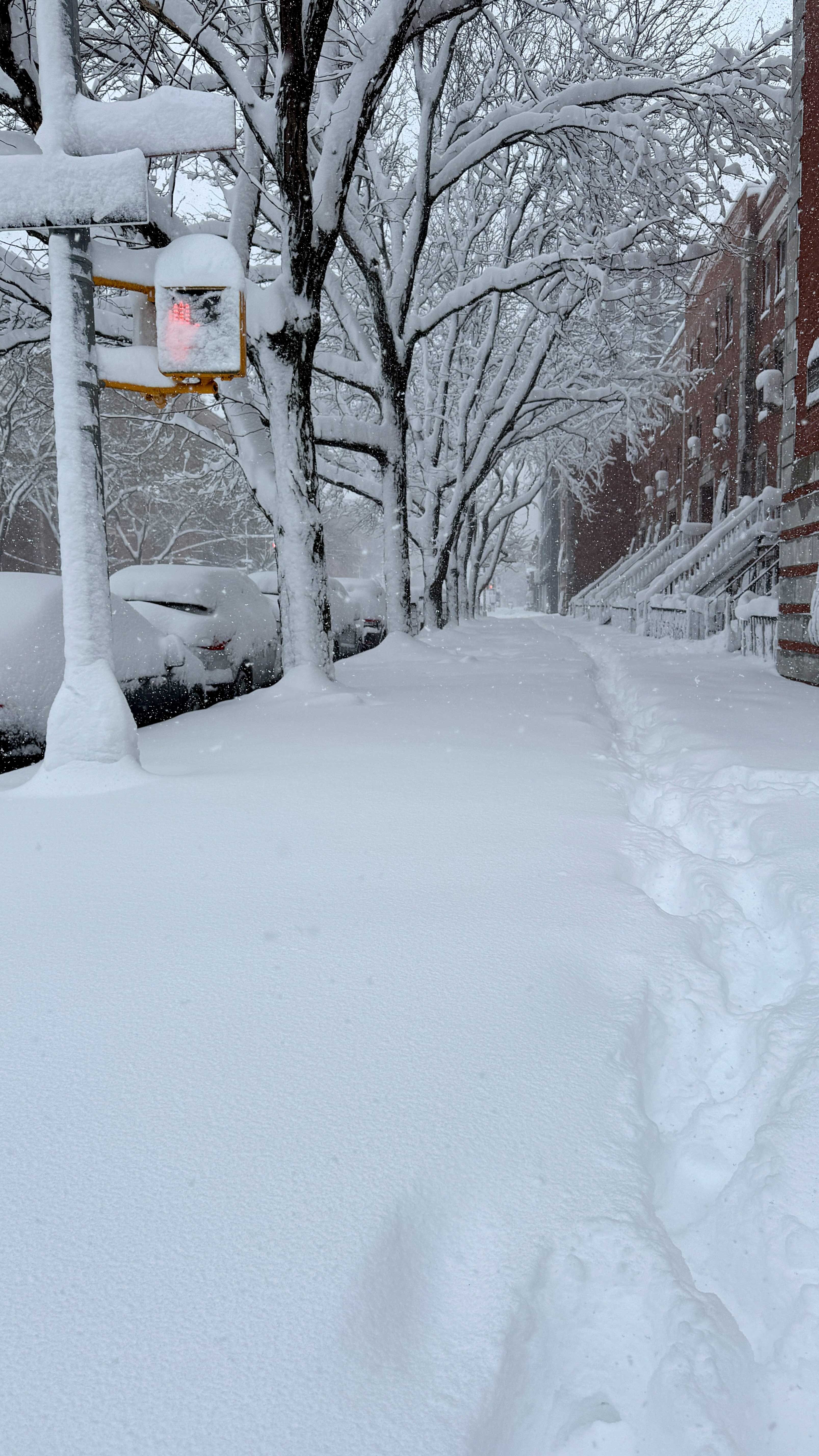
Trees looked otherworldly, laden with snow. Branches struggling under new weight, violent in the wind, broke and fell; a different kind of lightning.
The wind blew sheets of white across a largely empty landscape. That was what made a storm a blizzard, the snow that flew into faces and horizons and the façades of buildings, the snow that came between us and everything else.
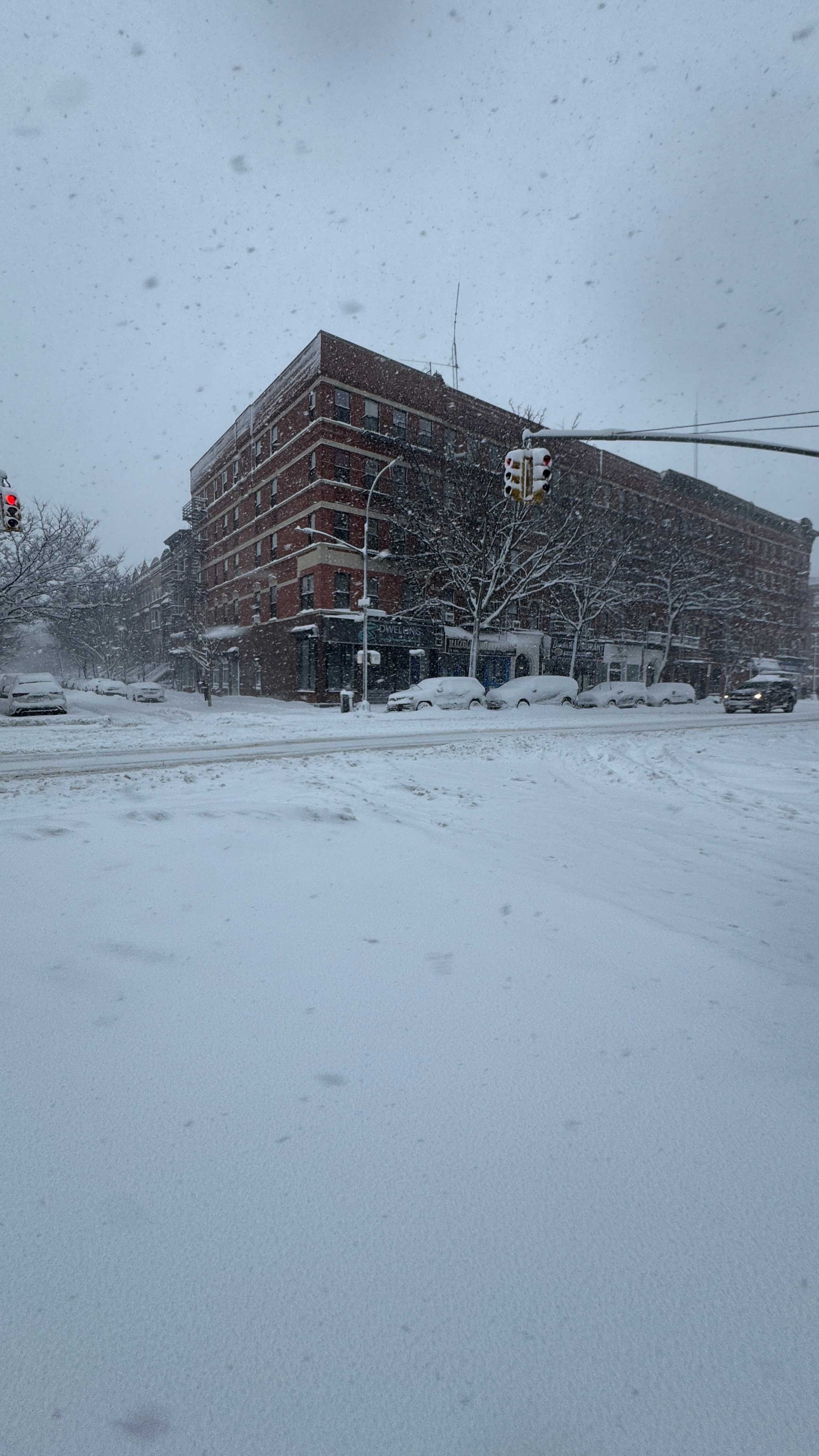
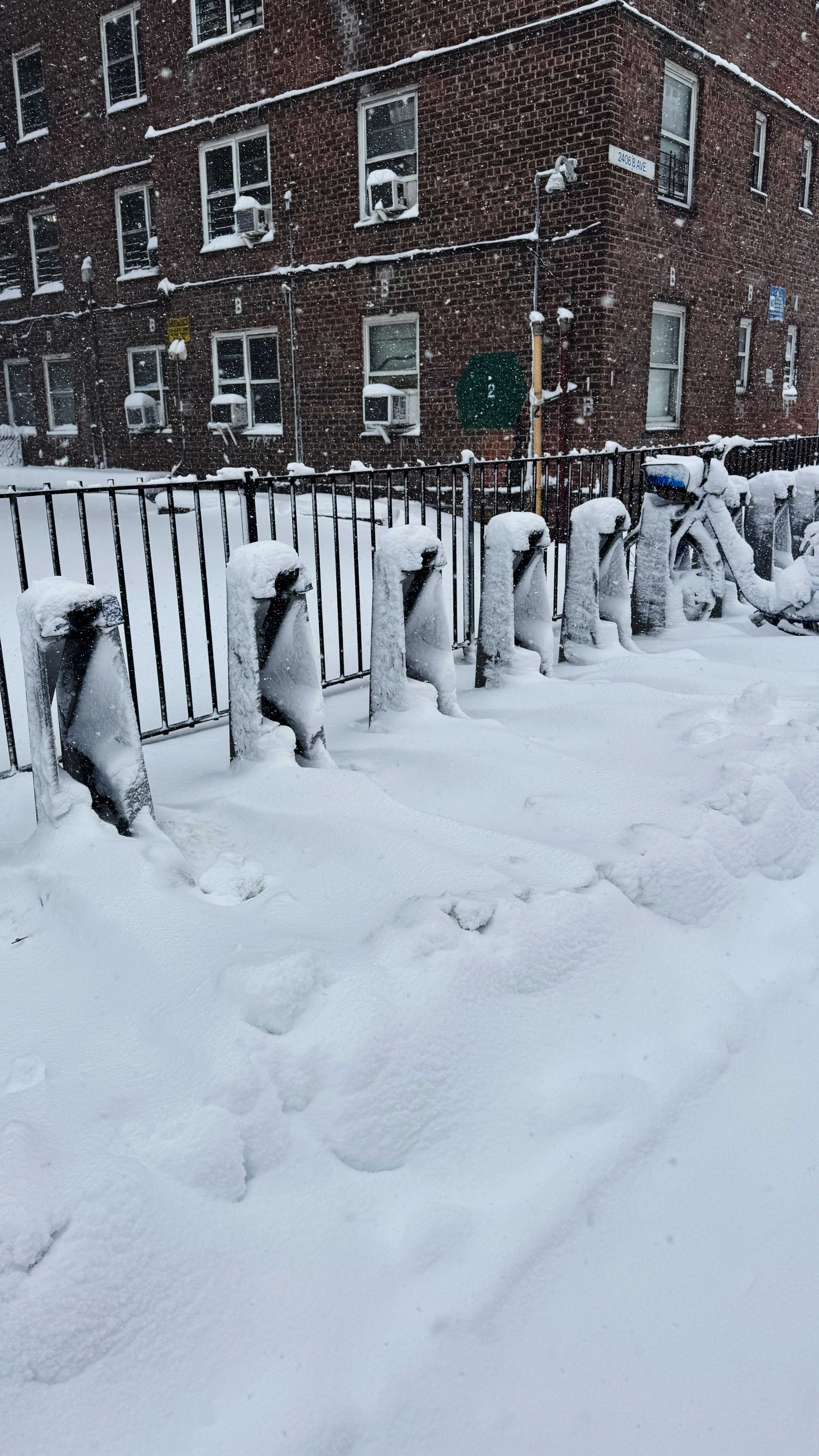
I turned on 125th Street. Was it 125th Street? There were the usual storefronts and building signage: GAP, Spectrum, Bank of America, Blick, Aldo. But everything had been changed, everything was different. City Bike stations were bowed supplicants, or gothic monks.
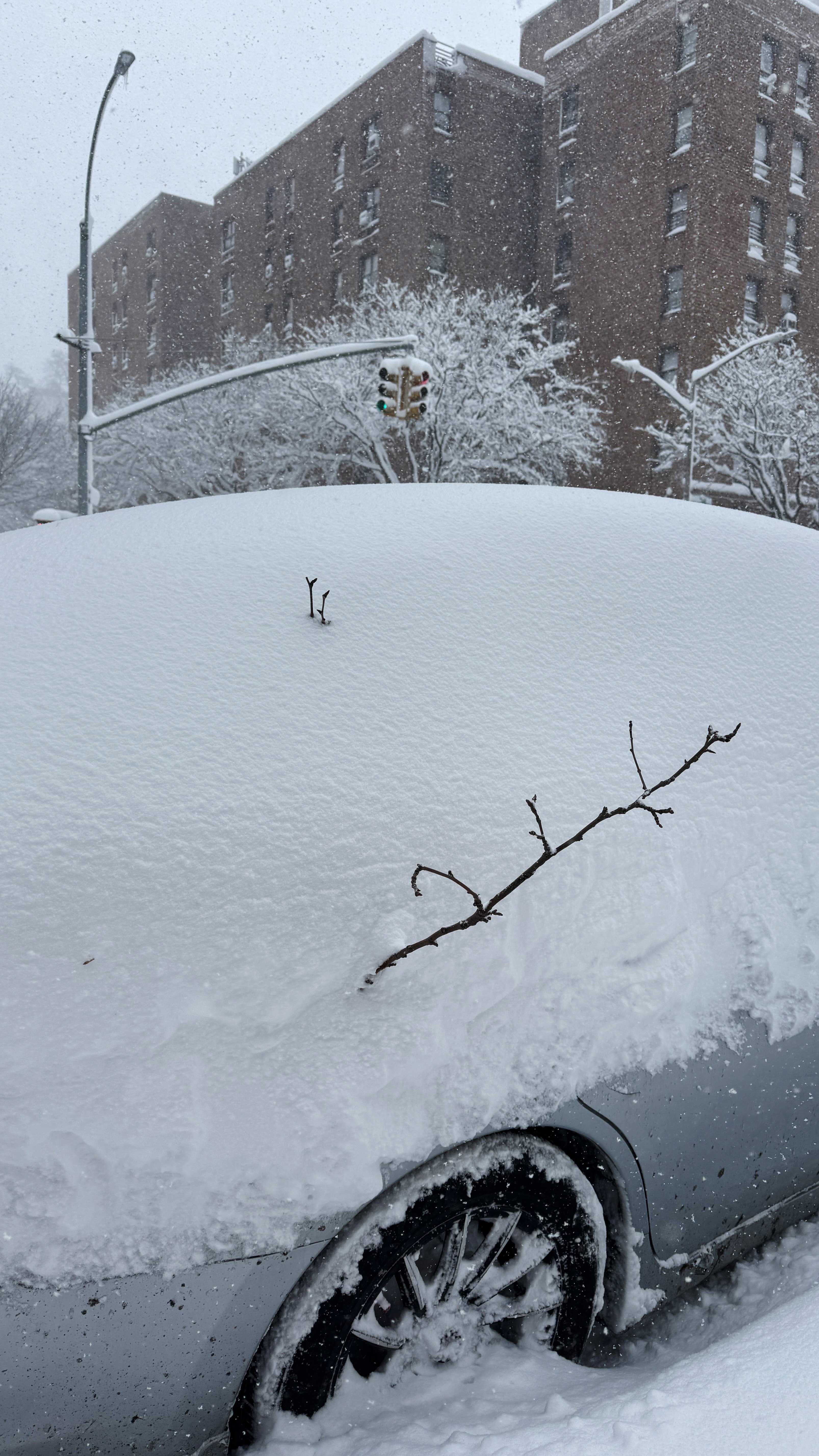
Cars had become giant insects, with tails and antennas.
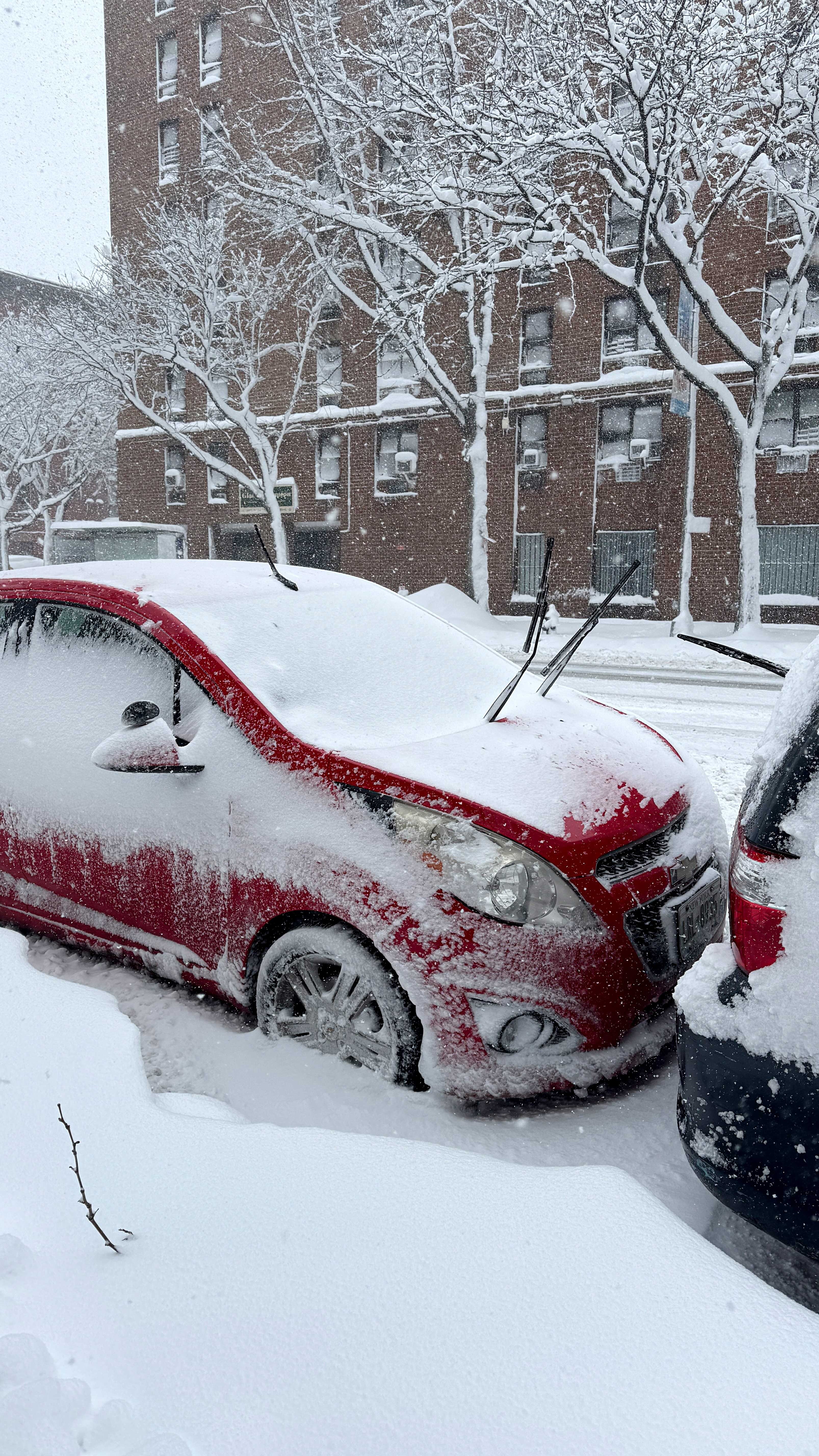
To help them in their metamorphosis, someone had stuck twigs in their snowy mantles. Tiny legs, rearing.
Birds were flying. There were still birds. And people, waiting for buses. But the people only showed their unmoving backs; they were silhouettes; they weren’t real. But the buses were real. There were still buses.
I marveled at this city.
Water got into my phone; I’d have to put it into a bowl of rice, later.
I saw this word used in some European chocolate marketing and am paying it forward.
Congratulations (again) on the new fellowship! That's incredible. And continue to love watching how the process/equipment/workspace behind this new film develop. As always, TLB is a peek into this stuff that doesn't exist almost anywhere else.
One thought about your friend's question -- it's interesting to consider. Creating a film "perfectly to spec and vision with zero time or effort" gets talked about a lot these days. And we've been thinking lately about how much of the best material emerges from the time and effort itself.
Miyazaki popped up in this one -- he's a good example. All of his productions were made up primarily as they went along (including the storyboards), and each shot was a series of creative and technical problems solved in the moment, as the whole team fought to make it "work." The films radically evolved as they were created. There's also what Pixar once called its "from suck to nonsuck" system. The films were wrestled into shape with time, effort and trial-and-error, because most of them were bad at first! Made to spec and vision, they would've been unwatchable.
All of which is to say that the process for your new film is very cool, and feels like an answer to the instant-turnaround, no-thinking, no-solving approach that's spreading right now. Sorry for going on so long -- your friend's comment just offered a lot of food for thought. Thanks for another awesome issue!
Love how you transform NY into a strange snow bound realm of bugs ❤️